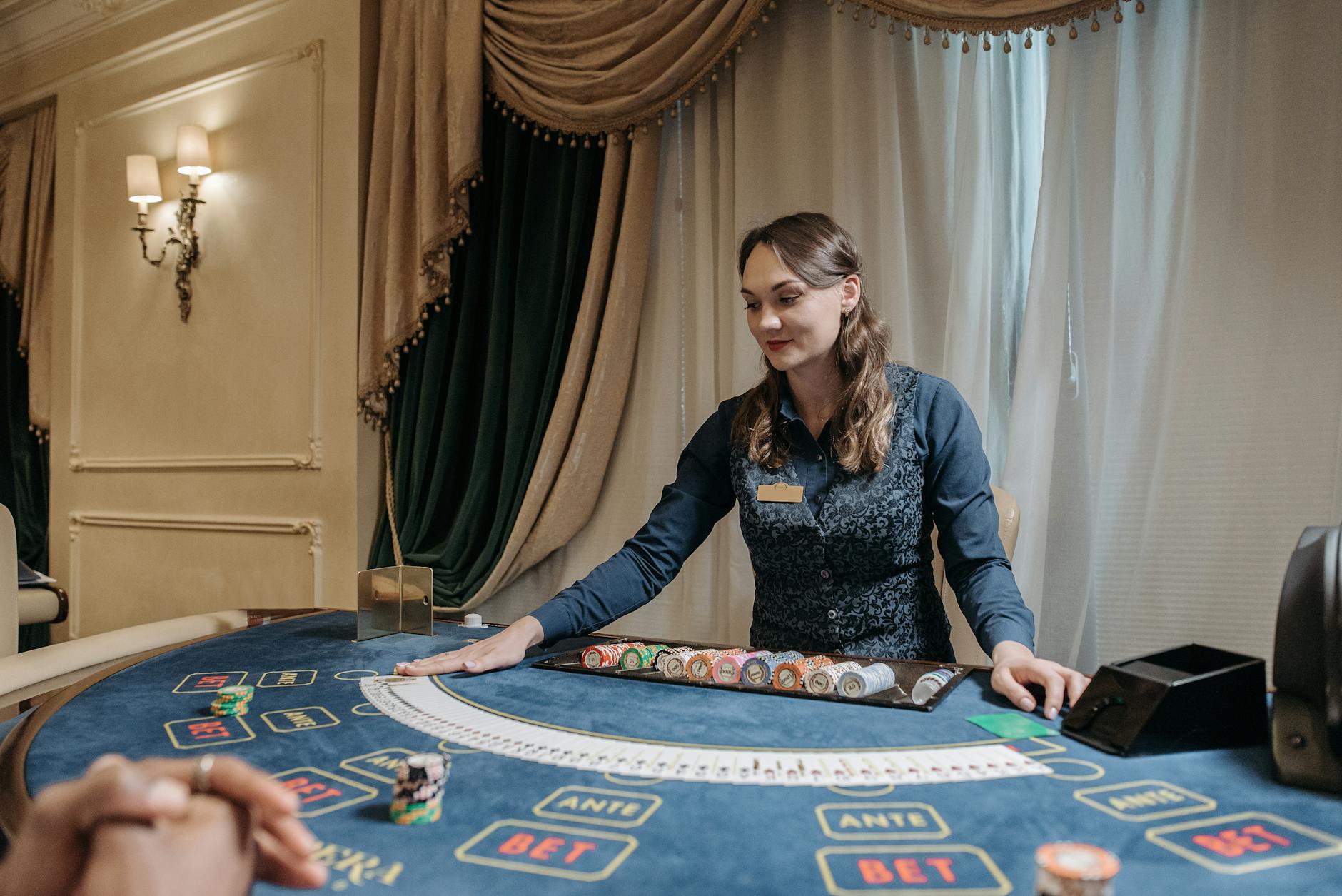
How to Play Baccarat: Step by Step
Baccarat has a reputation for exclusivity — velvet ropes, high limits, and a certain cinematic mystique. The truth, once you're inside, is rather more accessible: baccarat is one of the simplest card games in the casino, with a house edge among the lowest available. This briefing will walk you through every stage of a live hand, from taking your seat to collecting your winnings, so you can approach the table with quiet confidence.
The Objective: What You're Actually Trying to Do
Your goal is not to beat the dealer. You are betting on which of two hands — the Banker or the Player — will finish closest to a total of nine. A third option, the Tie, wagers that both hands will end on the same total. That's the entire premise. The cards do the work; your only decision is where to place your chip.
If you're new to the game and want a wider introduction before diving into mechanics, start with What Is Baccarat? A Beginner's Briefing.
Step 1 — Understanding Card Values
Baccarat uses its own scoring system, and it's the one element that catches new players off guard. Memorise these before anything else:
- Ace = 1 point
- 2 through 9 = face value
- 10, Jack, Queen, King = 0 points
When a hand's total exceeds nine, only the rightmost digit counts. So a 7 and an 8 combine to 15, which scores as 5. A King and a 9 combine to 9, scoring exactly 9. There is no busting in baccarat — the maths always produces a result between 0 and 9.
For a deeper look at scoring examples, see Baccarat Card Values and Scoring.
Step 2 — Placing Your Bet
Before any cards are dealt, you must place your wager in one of three clearly marked areas on the felt:
| Bet | Payout | House Edge (8-deck shoe) |
|---|---|---|
| Banker | Even money minus 5% commission | ~1.06% |
| Player | Even money (1:1) | ~1.24% |
| Tie | 8:1 | ~14.4% |
The Banker bet carries the lowest house edge, but a 5% commission is deducted from winning Banker payouts. The Tie bet's tempting 8:1 payout is offset by its punishing house edge — it is statistically the weakest option on the table. For a full mathematical breakdown, visit Baccarat Odds and the House Edge.
Step 3 — The Deal
Once bets are locked, the dealer — or the software in an online game — distributes cards in a set sequence:
- One card face-up to the Player position
- One card face-up to the Banker position
- A second card face-up to Player
- A second card face-up to Banker
Both hands now hold exactly two cards. The totals are calculated, and the action continues according to a strict set of rules — not dealer discretion.
Step 4 — Naturals: The Instant Win
If either hand totals 8 or 9 from the first two cards, it is called a Natural. Play stops immediately and the Natural hand wins (or ties, if both are Naturals). No further cards are drawn. A Natural 9 beats a Natural 8; identical totals are a Tie.
Step 5 — The Third Card Rules
If no Natural is dealt, the game consults a fixed drawing table to determine whether either hand draws a third card. You do not make this decision — it is automatic and identical in every casino and software provider worldwide.
Player Drawing Rule
The Player hand acts first and it is the simpler rule:
- Player total 0–5: draws a third card
- Player total 6 or 7: stands (no draw)
Banker Drawing Rule
The Banker's decision depends on the Banker's own total and, if the Player drew, the value of the Player's third card. The table below covers every scenario:
| Banker Total | Banker Draws When Player's Third Card Is… | Banker Stands When Player's Third Card Is… |
|---|---|---|
| 0, 1, 2 | Always draws | — |
| 3 | 0–7, 9 | 8 |
| 4 | 2–7 | 0, 1, 8, 9 |
| 5 | 4–7 | 0–3, 8, 9 |
| 6 | 6, 7 | 0–5, 8, 9 |
| 7 | Always stands | — |
If the Player stood on a 6 or 7 and did not draw, the Banker draws on 0–5 and stands on 6–7. This ruleset is explained in even greater detail in The Third Card Rule Decoded.
Step 6 — Settling the Hand
Once all cards are revealed, the hand closest to 9 wins. Winning Player bets pay 1:1. Winning Banker bets pay 0.95:1 (i.e., even money less the 5% commission). A Tie pays 8:1 to those who bet on it; Player and Banker bets on a Tie round are typically returned as a push. All losing chips are swept from the felt and the next round begins.
Practical Tips Before You Sit Down
- Know your table minimum. Baccarat tables range from low-stakes online games to five-figure-minimum private rooms. Pick a table your bankroll can sustain comfortably.
- Stick to Banker or Player. These two bets account for the only mathematically sensible wagers on the main game. Avoid side bets until you understand their individual odds.
- Ignore streaks as predictors. Past results do not influence future outcomes. The shoe has no memory. Our Baccarat Myths Debunked article covers this thoroughly.
- Use a staking plan. Before you play, decide your unit size and your session limits. The Q Branch staking calculator can help you work out sensible bet sizing relative to your bankroll.
- Track results if you enjoy it. Many players find roadmaps useful for spotting patterns. The Shoe Pattern Board is a free tool for visualising a live shoe.
Where to Go Next
Now that you have the full sequence — bet, deal, naturals, third-card rules, payout — you're equipped to play. The logical next step is understanding why certain bets perform better than others over time. Head to Banker vs Player: Which Bet Wins More? for the statistical comparison, or explore Bankroll Management for Baccarat to protect your chips as intelligently as you place them.
Responsible gambling reminder: baccarat is a game of chance. No strategy, system, or pattern observation can overcome the built-in house edge over the long run. Set a budget before every session, treat losses as the cost of entertainment, and stop when your limits are reached. If gambling ever stops feeling like fun, visit BeGambleAware.org or a local helpline for free, confidential support.
Play Responsibly · 18+
Baccarat is a game of chance with a fixed house edge. Set limits before you play and never chase losses. Support: BeGambleAware · Our RG hub.
▸ Related Briefings


