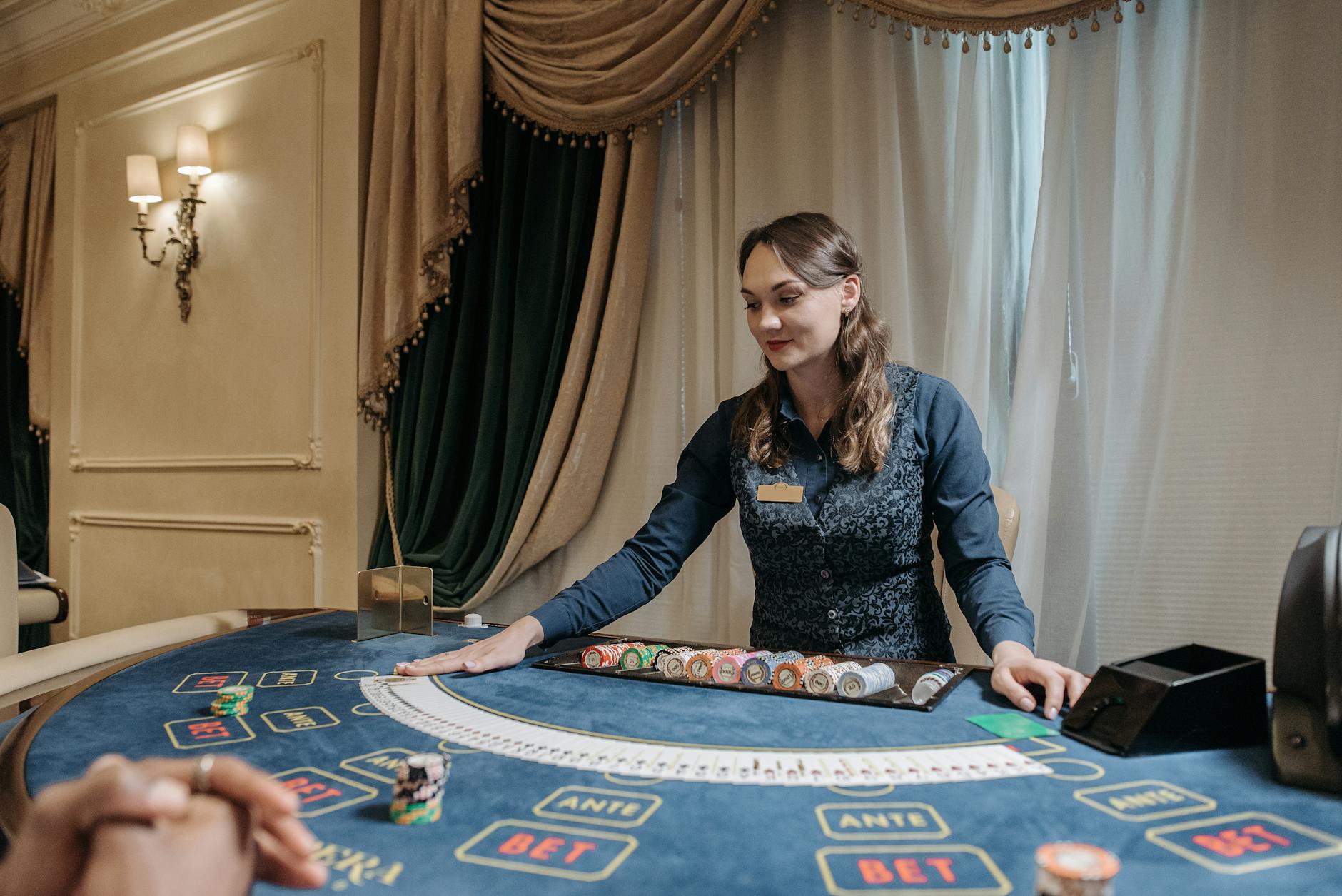
What Is Baccarat? A Beginner's Briefing
Baccarat. The word alone conjures images of tuxedos, chandelier-lit casinos, and a certain fictional British intelligence operative ordering his chips with quiet authority. Yet behind the glamour lies one of the simplest, most mathematically transparent card games in any casino — and that combination of elegance and clarity is precisely why millions of players worldwide choose it every day. Whether you have never seen a baccarat table or you have watched a few hands without quite following the action, this briefing will bring you fully up to speed.
The Mission Objective: What Baccarat Is Actually About
Baccarat is a comparing card game played between two fixed positions: the Banker and the Player. Neither position belongs to you — as a bettor, your job is simply to predict which hand will end closer to a total of nine, or whether both hands will tie. That is the entire objective. No decisions about hitting or standing, no reading opponents' faces, no complex strategy tree. The dealing rules are fully predetermined, which means the game essentially runs itself once bets are placed.
This hands-off structure is a feature, not a bug. It makes baccarat one of the most accessible games on the floor — and, crucially, one where the house edge is openly knowable before you wager a single chip. For a deeper dive into the numbers, see our Baccarat Odds and the House Edge briefing.
A Brief History Dossier
The game's origins are contested — Italy and France both stake a claim — but the version most casino players encounter today descends from Chemin de Fer and Punto Banco, which spread from Havana to Las Vegas in the 1950s and later dominated the high-limit rooms of Macau. Today, baccarat generates more casino revenue globally than any other table game. In Macau alone it accounts for the majority of gaming income. The game travelled far and arrived everywhere.
Card Values: The First Intelligence Briefing
Before you can follow a hand, you need to know how cards score. The system is unique to baccarat and takes about sixty seconds to memorise.
- Ace — worth 1 point
- 2 through 9 — worth face value
- 10, Jack, Queen, King — worth 0 points
Hand totals are calculated by adding the card values and then dropping the tens digit. So a 7 and an 8 total 15, which becomes 5. A King and a 4 total 4. A 9 and a 9 total 18, which becomes 8. You cannot bust in baccarat — the maximum possible total is always 9. For a full breakdown, visit Baccarat Card Values and Scoring.
How a Hand Is Dealt
At the start of each coup (the French term for a round), both the Banker hand and the Player hand receive two cards face up. If either hand totals 8 or 9 from the initial two cards, that is called a natural — the hand ends immediately, and the higher natural wins. If no natural is dealt, a strict set of predetermined rules determines whether a third card is drawn for either hand. You do not choose; the rules choose for you.
The third-card logic can look complex at first glance, but it operates automatically. Our dedicated article on The Third Card Rule Decoded walks through every scenario with clarity.
The Three Bets Explained
Every baccarat table offers the same core betting menu. Here is what each wager means, and — critically — what it costs you over time.
| Bet | Wins When… | Typical Payout | House Edge (8-deck shoe) |
|---|---|---|---|
| Player | Player hand total beats Banker | 1:1 (even money) | ~1.24% |
| Banker | Banker hand total beats Player | 0.95:1 (5% commission deducted) | ~1.06% |
| Tie | Both hands finish equal | 8:1 (sometimes 9:1) | ~14.4% |
The Banker bet carries the lowest house edge at approximately 1.06%, making it the statistically preferable wager — which is precisely why the casino deducts a 5% commission on winning Banker bets. Without that commission, the Banker bet would actually favour the player. For the full explanation of why this works the way it does, see Why the Banker Bet Pays Commission.
The Tie bet's 14.4% house edge makes it a costly proposition despite its attractive 8:1 payout. Our article The Tie Bet Trap examines the mathematics in detail.
Where Baccarat Is Played
You will find baccarat in three main formats at modern casinos:
- Big Table Baccarat — the traditional high-limit version with up to 14 seats, multiple dealers, and a formal atmosphere.
- Mini Baccarat — a faster, lower-limit version dealt by a single dealer at a blackjack-sized table. The rules are identical.
- Live Dealer Baccarat — streamed in real time from a studio or land-based casino floor, combining online convenience with human dealers. See Live Dealer Baccarat Basics for a full orientation.
Common Misconceptions: Cleared for Filing
Baccarat attracts its share of myths. Patterns do not predict future outcomes — each coup is statistically independent of the last. No betting system eliminates or reduces the house edge; it is a fixed mathematical constant, not a variable you can manoeuvre around. Hot and cold streaks are a feature of human perception, not the shoe. If you want the full intelligence report on this topic, Baccarat Myths Debunked has you covered.
Your Next Steps
Now that you have the foundational briefing, your mission can continue in several directions. For a step-by-step walkthrough of an actual hand, proceed to How to Play Baccarat: Step by Step. When you are ready to think about how much to wager on each coup, the Q Branch staking calculator can help you size bets relative to your session bankroll. And our Bankroll Management for Baccarat guide covers the discipline required to play a long, controlled session.
A responsible gambling note: Baccarat is a game of chance. No strategy, pattern-reading tool, or staking system can alter the house edge or guarantee a profit. Set a session budget before you play, treat any winnings as a bonus rather than an expectation, and never wager money you cannot afford to lose. If gambling stops being entertainment, confidential support is available from organisations such as GamCare (gamcare.org.uk) and the National Problem Gambling Helpline.
Play Responsibly · 18+
Baccarat is a game of chance with a fixed house edge. Set limits before you play and never chase losses. Support: BeGambleAware · Our RG hub.
▸ Related Briefings